
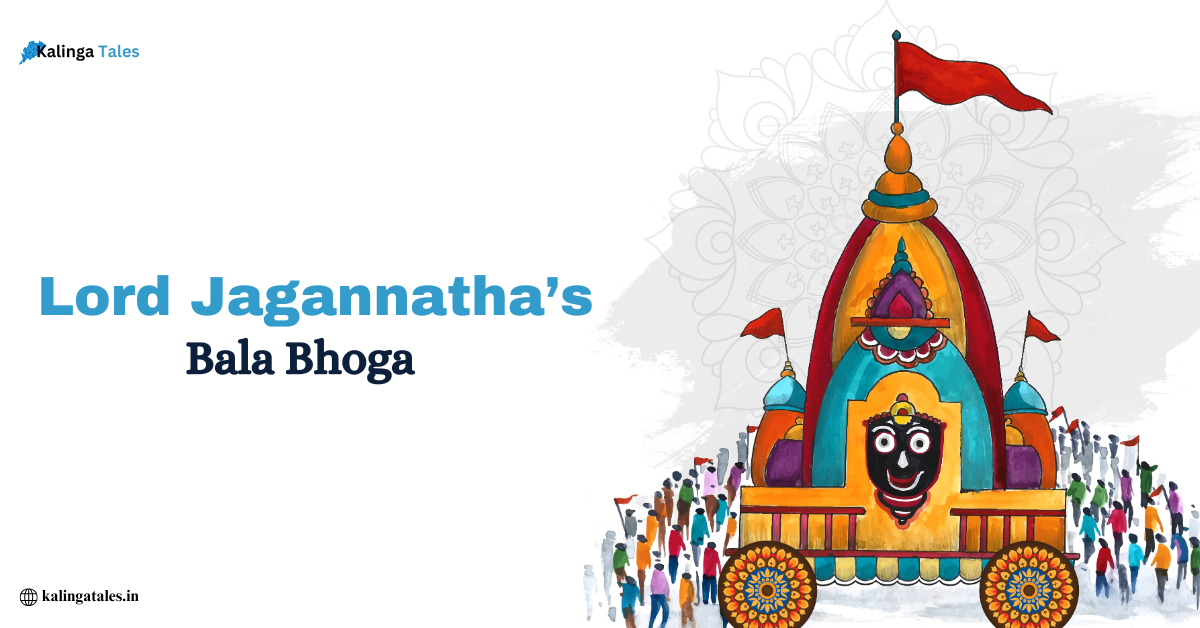
Shocking Story Behind Lord Jagannath’s Bala Bhoga
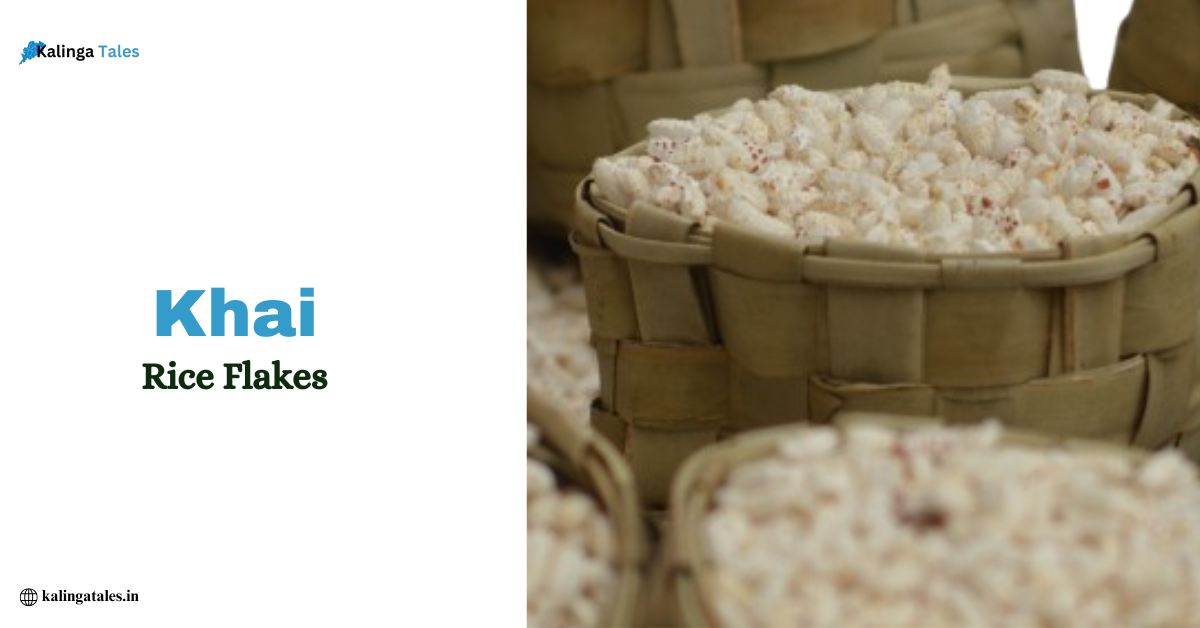
The holy month of Kartika holds great significance for Hindus, but for the people of Odisha, it is the holiest of all sacred months. During this month, Lord Jagannatha is adorned with the Radha Damodar Besha. From Ashwin Sukhlapaksha to Karthik Purnima, the Bala Bhoga is offered to the Lord. This Bhoga (Prasad) is quite simple, typically consisting of Khai (rice flakes), roasted black channa, pieces of coconut, and salt. In recent times, however, one can also find dried fruits and various types of fruits included in the Bala Bhoga.
So, why is this offering called Bala Bhoga? What does the word “Bala” mean? In Odia, “Bala” can refer to hair or children. This raises the question: what is the connection between hair and this holy offering?
According to the Madala Panji, a long time ago, in the year 1283, King Nisanka Bhanudev came to have a darshan (sacred viewing) of Lord Jagannatha in the evening. By this time, the evening arti (ritual worship) was over, and the main Pashupala (the person in charge of the Lord’s adornments) had already removed the garland from Jagannatha’s neck. However, the King asked for a tulsi leaf as prasad. The Pashupala was concerned as he had already discarded the sacred garland, and he feared that denying the King would anger him. So, to avoid conflict, he pulled out the tulsi leaf he had tied to his ponytail and handed it to the King.
The King was taken aback by the presence of strands of hair and questioned the Pashupala. In his panic, the Pashupala lied, claiming that the strands were Lord Jagannatha’s hair. The King was skeptical but the Pashupala insisted it was true. To verify, the King declared that he would return the next morning to check.
That night, filled with anxiety over his lie, the Pashupala considered ending his life by drinking poison, fearing the King’s wrath if the truth were to be revealed. He instructed his disciples not to mourn his death, drank the poison, and went to bed. To his surprise, he did not die. Instead, he had a dream in which he saw the Lord mockingly asking him if he thought the Lord was bald.
On the same night, the King had a similar dream where the Lord expressed irritation at him for not believing that even He could have hair. The next morning, the King visited the temple and saw the lock of hair on the idol but still did not believe it. He accused the Pashupala of deception. In disbelief, he entered the Garbha Griha (sanctum sanctorum) and pulled the lock of hair, causing blood to flow from the idol’s head. Astonished, the King prostrated himself before the Lord, crying for forgiveness.
This miraculous event is how the Lord saved His favorite Pashupala. To commemorate this divine leela (pastime), the arrangement of Bala Bhoga is performed every Karthik month.
Apart from this, there is another legend behind Bala Prasad. Long ago in Balasore, there lived a boy who used to graze cows in the fields. One day, he heard that a guru had come to the village and was giving out mantras to the people. In desperation, the child went to meet the guru, but upon arriving, he was told he could not meet the guru without offerings. So, he returned home, brought an earthen pot, and filled it with milk. He took the pot and approached the guru, requesting a mantra for himself.
The guru, annoyed, tried to ignore the boy. However, the boy persisted, begging for a mantra. In his anger, the guru said, “You want a mantra? Okay, take the Bala Mantra.” Here, “Bala” was used somewhat like slang and is considered vulgar in Odia. Unaware of its true meaning, the innocent boy assumed it was a mantra. Day and night, he chanted the word, believing it would lead him to salvation.
One fine day, while grazing his cows, he encountered a beautiful boy of his age, who approached him wearing a rich yellow dhoti with a peacock feather in his turban and holding a flute. The young boy questioned the cowherd about why he was calling his name. The cowherd replied that he hadn’t called anyone. The other boy insisted, “I heard you calling ‘Bala.’ My name is Bala Mukund, and people call me Bala.”
The cowherd, annoyed, shouted that he had not called him but was simply chanting the mantra given to him by his guru. The divine-looking boy smiled and began to play his flute. Captivated by the music, the cowherd wanted to befriend him. Soon, their friendship blossomed, and they would meet daily at the same place to play together. The cowherd carried a swag filled with snacks, known as khai. The charming boy asked if he could share some, and although the cowherd was initially hesitant, he eventually agreed.
As they played, the beautiful boy used his flute to keep the cows from wandering off, which further amazed the cowherd. People began to notice that he returned from the fields with a divine fragrance, and his cows appeared healthier, producing more milk. When they inquired about these changes, the boy attributed them to the mantra. However, the beautiful boy had asked him not to reveal anything about their friendship.
A few days later, the guru returned and heard stories from the villagers. He called for the cowherd, who came with a large pot of milk. The guru pressed him for the secret of his good fortune, but the boy insisted he could not say anything as he had promised his friend. The guru frightened him with threats of punishment in hell for defying him, which terrified the little boy. Ultimately, he asked the guru to follow him secretly to the field.
Upon arriving, he looked for his friend but could not find him. Calling his name yielded no response, and this broke his heart, causing him to start crying. Suddenly, he spotted the beautiful boy sitting next to him and apologized for breaking his promise. The divine boy comforted him and said he would no longer come to play, as he was leaving. As he was leaving the cowherd offered him khai for one last time. The boy took some and left with a smile.
Meanwhile, the guru could not see the beautiful boy but could hear the enchanting flute music and smell the fragrant air. This realization struck him: the Lord Himself had come to play with the cowherd. In humility, he approached the cowherd and fell at his feet, asking for forgiveness. To commemorate this event, the offering of Bala Bhoga is made to the Lord.
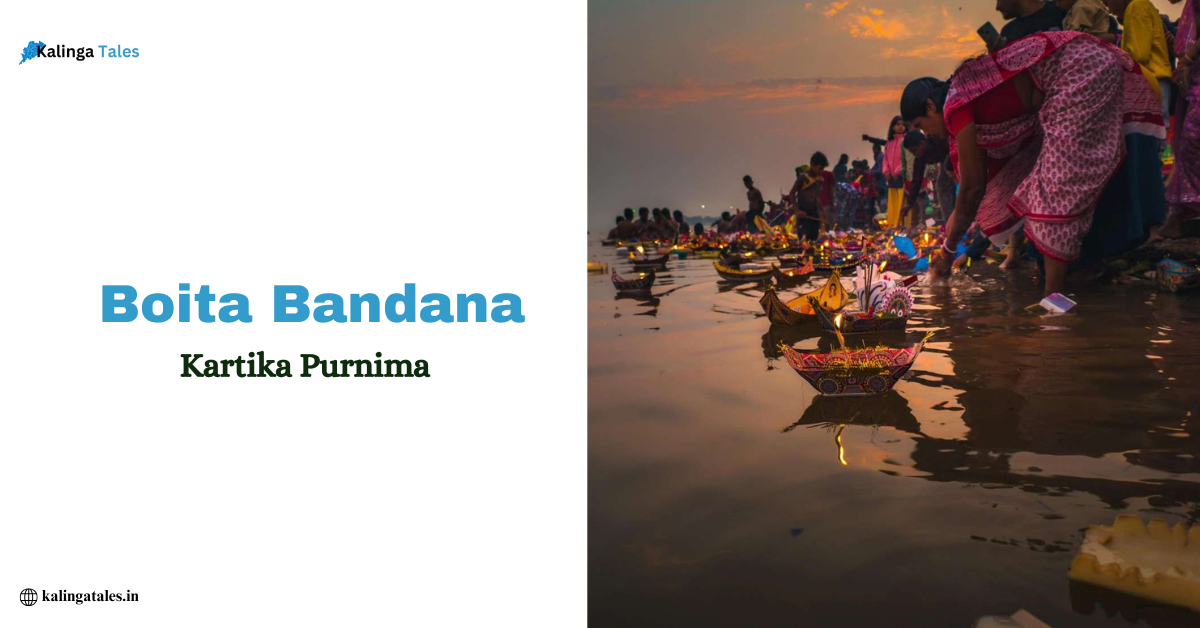
(Source : Reddit/Boita Bandana)
The leelas (divine pastimes) of Lord Jagannath have enriched the soil of Odisha and touched the hearts of its people. The month of Karthika is a celebration of life, which is one reason why it is said that even the crane refrains from fishing during this time. For me, Karthika evokes vivid memories of my maternal grandmother, who would often be seen drawing muruja near the tulsi plant while reciting holy prayers. These memories become even clearer when I think of my mother performing the early morning puja and lighting a ghee lamp in the evening next to our tulsi plant. She would read the Karthik Mahatyam, even as the chilly wind made her shiver. The excitement of participating in the boat ceremony at the end of the month was truly unique.
Aka maa boi pana gua thoi
Pana gua sabu tora,
Masika dharama mora.


In Hinduism, the relation between devine and human is described as “Bhakti” or we can call devotion. It’s a reciprocal bond between the divine and the individual, where the individual seeks to connect with God through love, surrender and selfless love.
Thanks for sharing your thoughts! It’s an unique and beautiful reminder of love,faith and devotion.
We are glad that you enjoyed reading our article. Yes, the Bhakti bhav means so much to us; it is one of the purest emotions that enrich our lives.
Dear reader,
we are glad that you liked reading this piece of writing. Please stay tuned for more such writeups. 🙂
Pingback: Sweet Makara Chaula and Traditions of Makara Sankranti in Odisha