Holi & Dola Purnima: Unique Festivities and Spiritual Traditions in Odisha
The festival of colours is just around the corner, and everywhere, there will be large gatherings, parties, and various celebrations organized for the public. Each state in India has its unique way of celebrating Holi. In some regions, it is called Holi, while in others, it is referred to as Rang Panchami. In Odisha, we call it Dola Purnima. As a child, I didn’t particularly enjoy playing with colours, but the spiritual rituals of Dola Purnima thrilled me. I loved the Kirtans and Rasleelas performed by devotees in honour of Lord Sri Krishna.
What is Holi, Rang Panchami, and Dola Purnima?
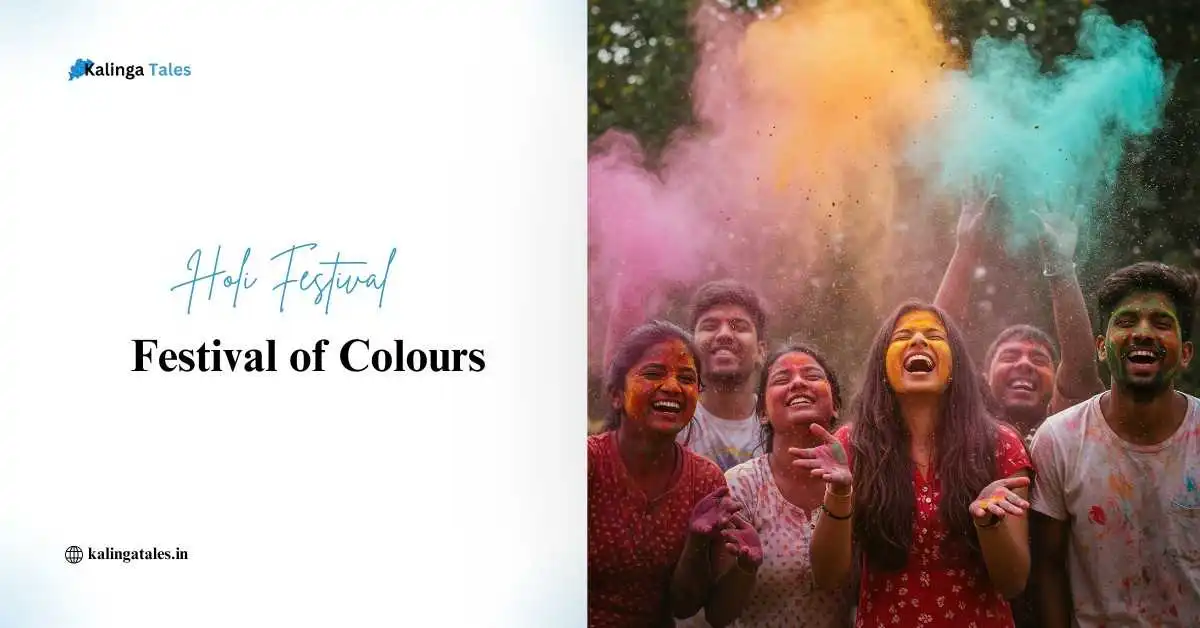
Holi, also known as the festival of colours, is one of the most awaited and significant festivals for Hindus. This festival marks the arrival of spring and symbolizes the victory of good over evil. The month of Phalguna is cantered around Vishnu and is considered a time for spiritual growth and transition. This makes the festival even more auspicious and sacred. To celebrate, people gather together, carrying their local deities and playing with colours.
When is Holi celebrated?
Holi is celebrated in the month of Phalguna, which falls in the middle of March. The day before is known as Holika Dahan, while the main day of the festival is called Dola Purnima, as it coincides with the full moon. Holi symbolizes goodwill, as the gentle spring breeze blows and the golden, shimmering moon shines over the villages. The main festivities begin on the 10th day of the Phalguna month and continue until the full moon day.
How is Holi celebrated in the rest part of India?
In the western part of India, the festival is called Rang Panchami, which marks the beginning of Holi celebrations with the burning of the Holika. This event takes place on the full moon night, known as Purnima, after sunset. The following day is referred to as Rang Panchami, when people gather to smear each other with gulal (coloured powder). Sweets are prepared and shared with friends and family during this festive time.
In northern India, Holi is celebrated with great enthusiasm, particularly in Braj, which is famous worldwide for its unique festivities. Tourists from around the globe visit Barsana and Braj to witness the vibrant celebrations. One of the unique traditions involves the use of lathis (sticks). According to ancient tales, Lord Krishna and his friends teased Radha in Barsana, which upset her. This angered the women of Barsana, who then chased Krishna and his friends with lathis. This story is one of the many leelas (divine plays) of Lord Krishna, and Barsana celebrates Holi in honour of the Rasleela between Radha and Krishna.
In southern India, the excitement for Holi is comparatively lower. However, people in the south also celebrate in their own subtle way. In Kerala, it is known as Manjul Kuli. This festival takes place at the Gosripuram Thiruma’s Konkani Temple, where Holi is celebrated with turmeric water. During the festivities, people sing traditional songs and engage in dance.
How is Holi celebrated in Odisha?
(Image Source : Instagram/t3odia)
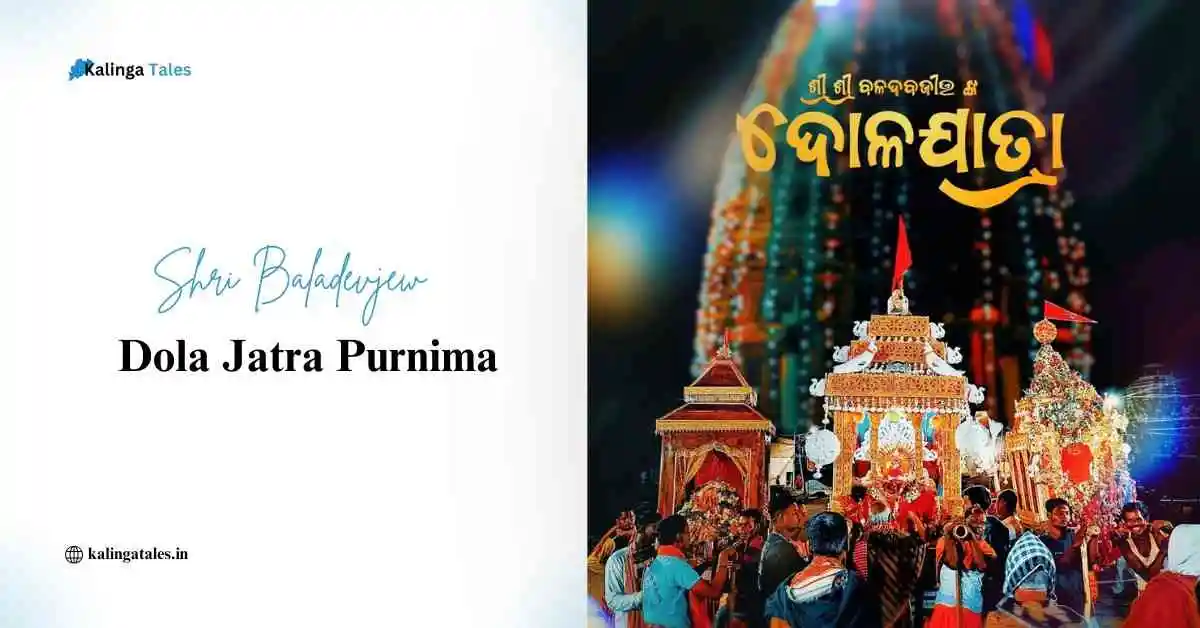
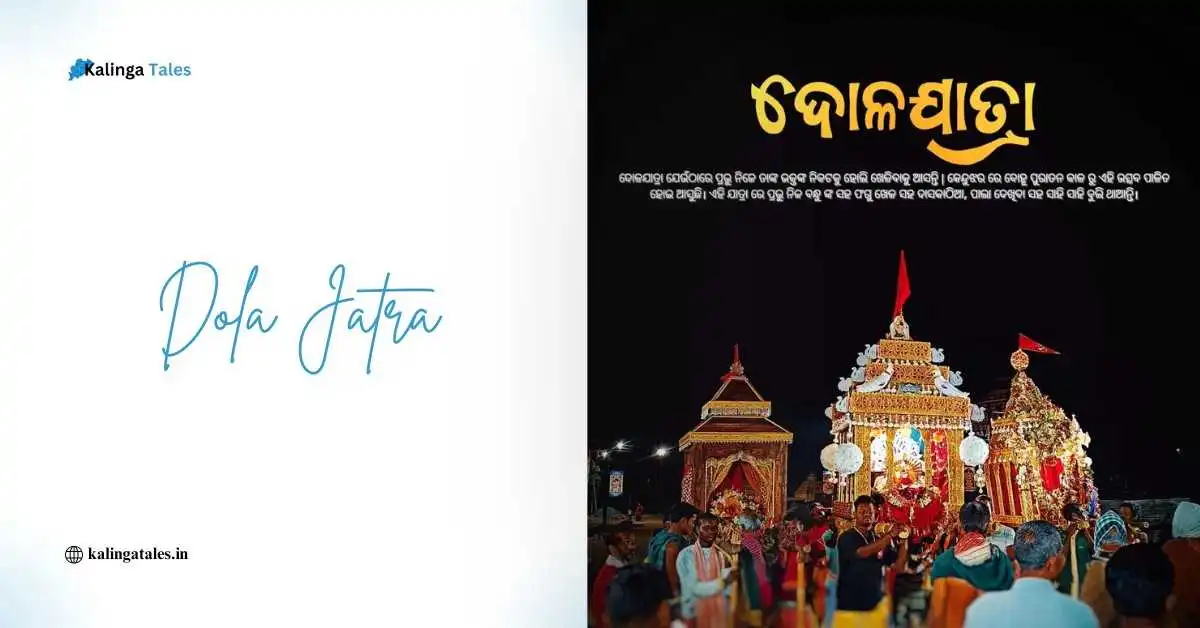
Holi is not just a festival of colours but a profound emotion filled with spiritual love for the people of Odisha. We refer to it as Dola Purnima. On this occasion, our beloved Mahaprabhu is adorned in the Radha Madhav besa. For us, Holi begins on the 10th day of the Phalguna month. Local and regional deities are dressed in beautiful clothes and jewellery and are taken door to door to meet their devotees. Special palanquins are prepared for the idols, which are seated upon them. Devotees perform Kirtan and hold processions, dancing to the rhythms of drums, mardalas, cymbals, and mridangams. The idols follow the procession to the same beats. This celebration continues until the full moon day, which is the main day of Holi. This ancient ritual in Odisha holds significance even in big cities. However, in villages, the atmosphere is different—more personal and grand.
Each village in Odisha holds a Holi fair. More than the fair itself, people eagerly await the arrival of their local deities, who come to their doorsteps. Devotees then offer them fruits, sweets, flowers, and a variety of foods. Isn’t it unusual? Generally, devotees go to the deities’ doorsteps; however, during this festival, the deity comes to visit their beloved devotees. The relationship that the Odia people have with their deities is more personal and intimate compared to that of people in other states. For us, the deity is not just a supreme being; they are also our friend, lover, mother, father, family, and acquaintance. That is why we can pray to Jagannath in whichever form we desire.
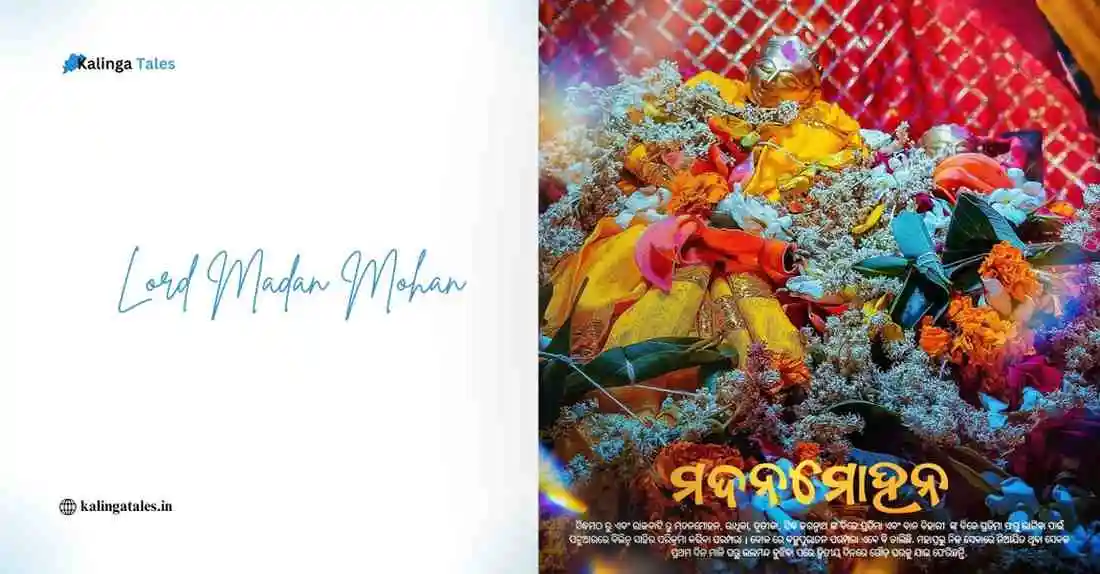
In Puri, the festival is celebrated in a divine manner. The movable deity of Lord Jagannath, known as Madan Mohan, is worshipped alongside Maa Sridevi and Bhudevi. He travels around the villages to meet his devotees and accepts whatever offerings they present. This is why the offering is referred to as “dwari bhoga,” meaning it is given at the doorstep.
At the Shri Mandira in Puri, Holi is celebrated by applying colours, although it is generally kept closed to the public, making it a more private celebration. As Madan Mohan is carried in a palanquin along with Shree Radha, it represents their Rasleela, and together they play Holi with their devotees during an event called Rasa Panchami. The beautiful Shree Radha dances joyfully with Krishna, and Holi symbolizes their divine love. This love can be truly understood when one gets the opportunity to participate in the Kirtana. Holi vividly paints the bond between Shree Radha and Krishna.
Suggested Read : Shocking Story Behind Lord Jagannath’s Bala Bhoga
For children, the festival revolves around gathering with family, enjoying prasad, and dancing in the procession. The Kirtan under the shimmering golden moonlit night creates a different kind of appeal for the spiritual mind. Each village, town, and city in Odisha witnesses this celebration annually.
As the procession concludes, the Lord must return to his temple, and a special ritual is performed before this happens, known as “Mendhasala Podi.”
What is Mendhasala Podi?
(Image Source : Puriwaves)
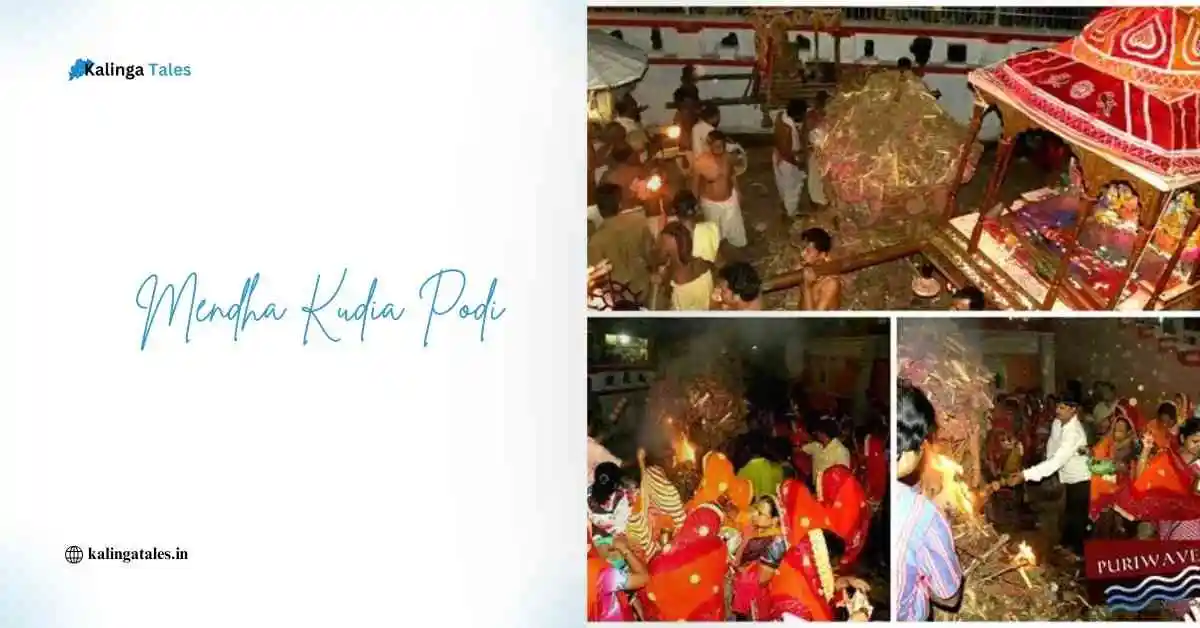
This unique ritual is conducted before the deity re-enters his temple. “Mendha” means sheep, and “Sala” means house, so it literally translates to “burning down the house of sheep.” Though it may sound intimidating, it shouldn’t be taken literally. This “sheep house” is built from dry straw, wood, and hay, similar to the Holika celebration in the northern regions of India. The idea behind this ritual is that the deity undergoes purification after a long journey, and they take seven rounds around the bonfire. It is believed that the God of Fire rides the sheep as his vehicle, hence the name Mendhasala Podi. This ritual is also linked to the story of Holika.
We are familiar with the tale of Holika, who, under the orders of her brother Hiranyakashyapu, entered the bonfire carrying Prahalad in her lap. Hiranyakashyapu did not want Prahalad (his son), a devoted follower of Lord Vishnu, to live, so he devised this plan. However, Holika’s boon from Brahma, which protected her from fire, failed as she attempted to use it to harm an innocent boy devoted to Vishnu. In the end, the fire consumed her. This is also one of the reasons for lighting the bonfire.
(Image Source : Instagram/t3odia)
During this procession, Lord Madan Mohan moves out of Shri Mandira and resides at Ballav Matha in Puri. Devotees keep their doors open and eagerly await Lord Madan Mohan’s visit to their homes.
Reflecting on my childhood, the memories of Holi bring immense joy to my heart. Most of my Holis were spent in Bhubaneswar, but I also cherished a few at my maternal grandmother’s house. We have our own temple located in the centre of the village. Throughout her life, I witnessed my grandmother serving Lord Raghunath (Lord Krishna) in that temple. My mornings began with Raghunath’s early morning Arati, while my evenings were filled with playing the Khanjani and cymbals during the evening Arati.
Seeing our beloved Raghunath seated in his palanquin as he visited our house thrilled me immensely. My grandmother would prepare various Pithas, sweets, and delicacies for Raghunath, smearing him with Abhira (colours) as she offered these delights. It gave me goosebumps to witness such a beautiful sight, with the palanquin moving to the next house, glistening under the shimmery moonlit night.
Holi is a festival of divine dance, and in Odisha, we celebrate it with the songs of our land. If you ever have the chance to visit Odisha, be sure not to miss the opportunity to travel to one of its rural areas during Holi. The Dola Purnima Melana may not be as grand as Braj’s Holi, but it carries a similar spiritual vibe.
Dola Purnima ra Hardika Abhinandana!