Agira Purnima: Agni Utsav Festival and the Divine Tale of Gaja Udharana Besa
Magha Purnima, celebrated as Agira Purinam or Agi Punei, is an exclusive festival in Odisha. This auspicious month of Magha is dedicated to Lord Vishnu and Goddess Laxmi and is believed to be highly significant, possessing the power to absolve sins and alleviate suffering. The festival is celebrated grandly throughout Odisha, especially in rural areas, where entire villages and communities gather around a holy fire to offer prayers to Agni Dev, the god of fire.
What is Agira Purnima?
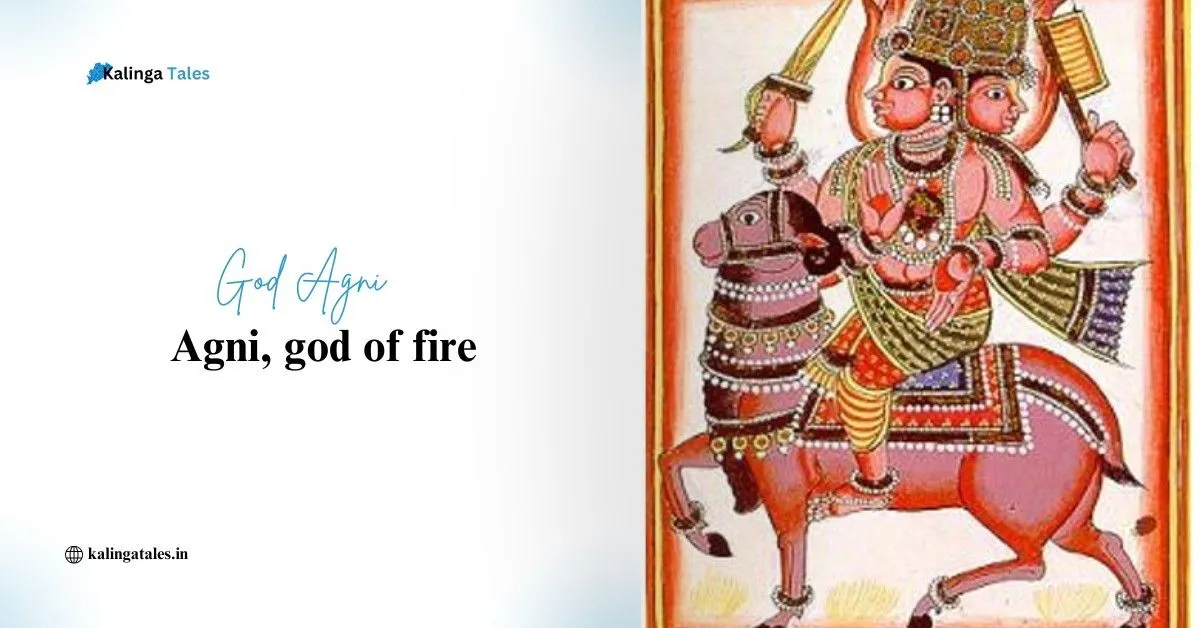
( Image Source : ancient-origins.net )
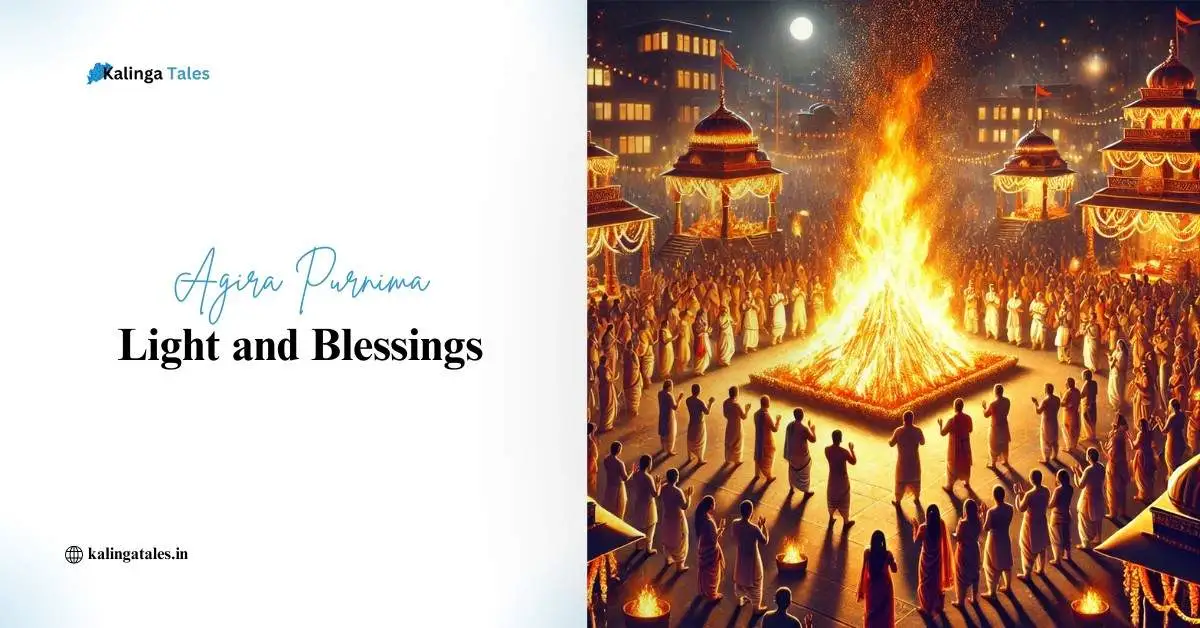
Agira Purnima, or Agi Punei, is a celebration of the fire festival. On this day, Agni Dev, who is thought to purify the souls of living beings, is worshiped. Fire holds a sacred place in Hindu Dharma as it burns away negativity, enriching the soul with positivity and purity. Performing a Yagna is regarded as highly important in our traditions; it prepares the human body to enter the divine realm. While we take daily baths to cleanse our physical bodies, our spiritual bodies also require purification. Thus, fire serves as a pathway to connect with divinity. In Odisha, the first Magha Purnima is celebrated as Agi Jala or Agira Purnima.
Why do we celebrate Agira Purnima?
Historically, winter days were harsh, and the biting cold could be life-threatening to vulnerable individuals. On this day, people would gather to collect hay, dry straw, leaves, branches, and logs of wood to light a communal fire, providing warmth for everyone. They would also bring vegetables from their homes to offer to the fire. As the fire consumed the offerings, they would collect the roasted vegetables and share them as a form of prasadam. This practice not only provided a nutritious meal to the needy but also fostered community bonding.
On a spiritual level, since the month of Magha is dedicated to Lord Vishnu and Goddess Laxmi, celebrating Agira Purnima serves as a way to welcome this holy month. The fire god is honored with Gandha (sandal paste), Dhoopa (incense), Deepa (lamps), and Naividya (offerings). The fire is typically taken from a potter’s kiln, and a bonfire is lit. People circumambulate the fire, engaging in kirtan and bhajan (devotional singing). It is believed that the fire cleanses impurities from the soul, preparing the body for spiritual healing. Properly observing this festival is thought to free participants from sins and suffering.
Agni Utsav Festival Celebration at Shri Mandir, Puri
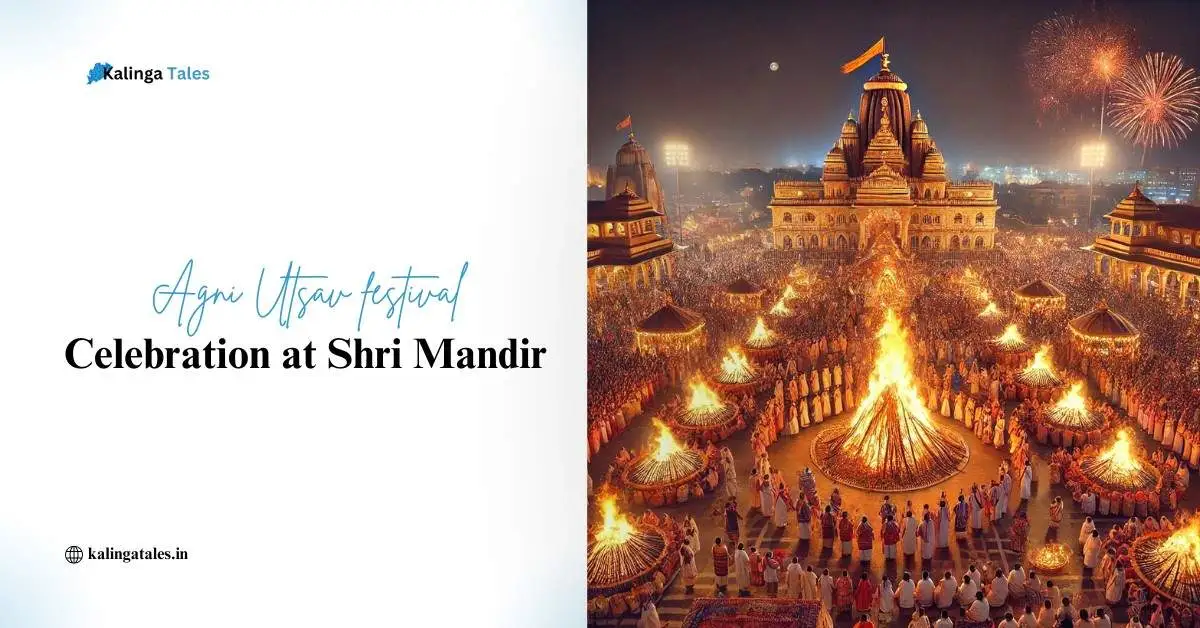 On this special day, the lord of the universe, Jagannatha Mahaprabhu, is adorned with a unique attire or besa known as the Gaja Udharana Besa. In this extraordinary ensemble, the lord is seen wearing various ornaments, including the sun and moon, a waist belt, a crown, and bangles. Goddess Laxmi sits on his lap, and both are seated on Pakshiraj Garuda, flanked by an elephant (Gaja) near his feet and a crocodile beside it. Notably, this is the only attire where Maa Subhadra is depicted holding a lotus flower in her hand.
History of Gaja Udharana Besa at Shri Mandir
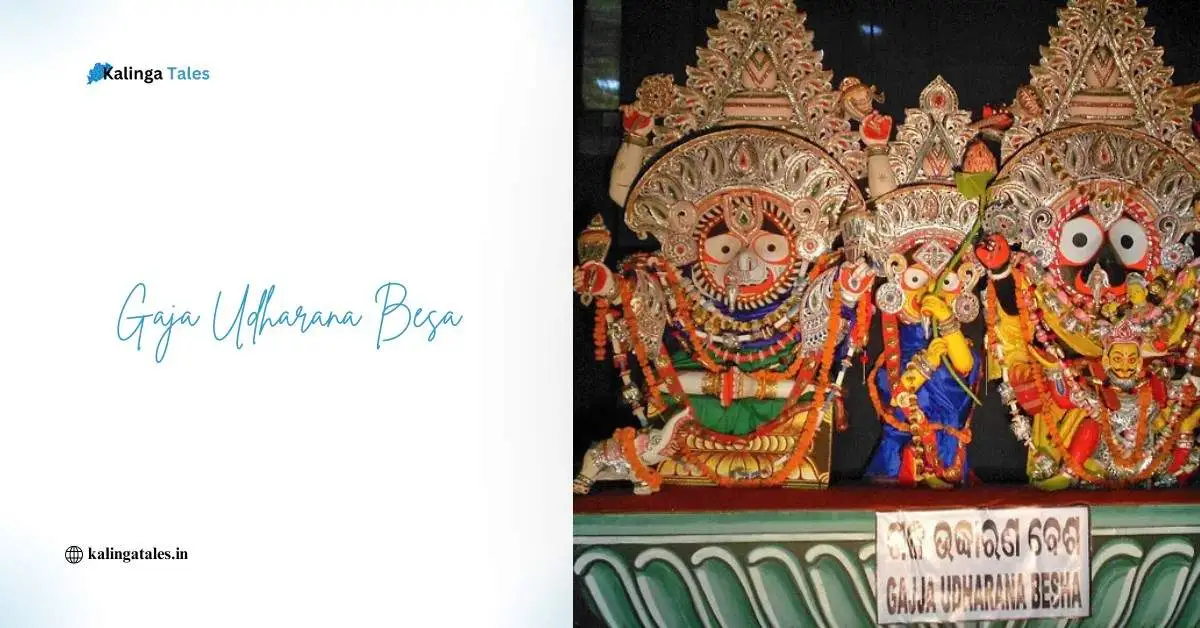
( Image Source : Medium/Prateek Pattanaik)
According to the esteemed researcher Padmashri Sadasiva Rath Sharma, this besa was first introduced by Smt. Bakula Mahadevi, who was the queen of the Bhomya Dynasty. However, due to various obstructions, the ritual was discontinued for many years until King Ramachandra Deva reintroduced it in the year 1575.
Suggested Read: Kartika Niti: Importance of Radha-Damodar Besa and Kartika Mahatmya
The Story Behind Gaja Udharana Besa
The origins of the Gaja Udharana Besa date back to ancient times and tell the tale of a divine elephant (Gaja) belonging to Lord Vishnu, who wandered the forest in search of water. Upon discovering a nearby river, it approached to quench its thirst but accidentally slipped and fell into the water. While trying to free itself, the Gaja was attacked by a crocodile that bit one of its feet and refused to let go. In pain, the elephant began to cry out.
The tussle between the Gaja and the crocodile continued for a considerable time, and the elephant realized that it might soon fall victim to its adversary. In desperation, it began to pray to Lord Vishnu. Its gaze fell upon a lotus flower blooming in the river, and the Gaja knew that the lotus was Vishnu’s favorite flower. With hope, the Gaja offered the flower in prayer, believing that Lord Vishnu would surely listen.
Fortunately for the Gaja, Lord Vishnu was out for a stroll with Goddess Laxmi when he heard the elephant’s painful cries. He rushed to the scene, rescued the Gaja, and defeated the ferocious crocodile. The crocodile was then sent to Vaikuntha, where it eagerly awaited the gods. Upon seeing the crocodile, Maa Laxmi became angry and questioned the Lord about whether the creature deserved a place in Vaikuntha for its actions. Vishnu explained that there must be a deeper reason behind everything, urging her to patiently wait for the Gaja to arrive in Vaikuntha.
Years passed, and the Gaja grew old and eventually died. Upon reaching Vaikuntha, it met its former enemy, the crocodile, who was surprisingly present. Maa Laxmi, having waited for this moment, commanded the crocodile to explain itself. The crocodile happily recounted the stories of its past lives. It revealed that it had once been a devoted worshiper of Vishnu, fervently praying for liberation (Moksha). After enduring countless prayers, Vishnu had finally granted its wish, but with a condition: the crocodile would first have to be born as a crocodile and take on its sins by attacking Vishnu’s elephant.
This is an intriguing story behind the extraordinary besa of Lord Jagannatha. The devotees eagerly await this besa, and one can witness a huge crowd during the Magha Purnima at the Shri Mandira.
When I was younger, visiting my maternal grandmother’s place used to bring immense joy. I often went around the village with other kids, collecting dry straw and logs. After the evening Arati at the temple, we would all gather together to dance around the bonfire, singing bhajans. Those moments created warm memories of my childhood. I also remember asking for potatoes, brinjal, and other vegetables to offer to the god of fire. My mother would take a pinch of ash from the bonfire and put it on my head while chanting some mantras. All I wanted in return were roasted sweet potatoes, brinjals, and whatever we could find. Sharing these moments with other kids filled me with happiness.
As I grew up, my visits to the village became less frequent. However, every year, to relive those memories, I would walk to a nearby temple ground with my mother, carrying vegetables and straw in my hands. The warmth of the experience was somewhat diminished, but the bonfire rekindled the joy of my childhood.
Wishing all the Odias A Happy Agi Punei
Agi Punei ra Hardika Subbhechha o Subhakamana!
Agni Utsav, also known as Agira Purnima, is a festival in Odisha marking the transition from winter to spring. It involves fire rituals to purify the environment, protect crops, and seek prosperity.
Agni Utsav honors Agni Dev, the fire deity, and is celebrated for purification, protection of crops, and welcoming spring. The ritual burning symbolizes the cleansing of negativity and ensures a bountiful harvest.
Agni Puja purifies the environment, removes negative energies, and promotes prosperity. It is believed to protect crops, enhance spiritual well-being, and bring good health to devotees.
Agni Utsav is celebrated in the Odia month of Magha, typically in January or February, on the full moon day, known as Magha Purnima.
Gaja Udharana Besha depicts Lord Jagannath rescuing an elephant from a crocodile, symbolizing divine grace. It is observed on Magha Purnima at the Jagannath Temple in Puri.