
Sweet Makara Chaula and Traditions of Makara Sankranti in Odisha
Makar Sankranti is widely celebrated across India and is considered as the New Year for Hindus. Each region has its own unique way of observing this festival, and Odisha is no exception. On this day, Odia households are filled with divine aromas. The star dish, Makara Chaula, is prepared using newly harvested rice mixed with grated coconut, a pinch of black pepper, cardamom, clove, jaggery, cottage cheese, various fruits, and ghee. In addition to Makara Chaula, many types of pithas (traditional cakes) are made and offered to the gods.
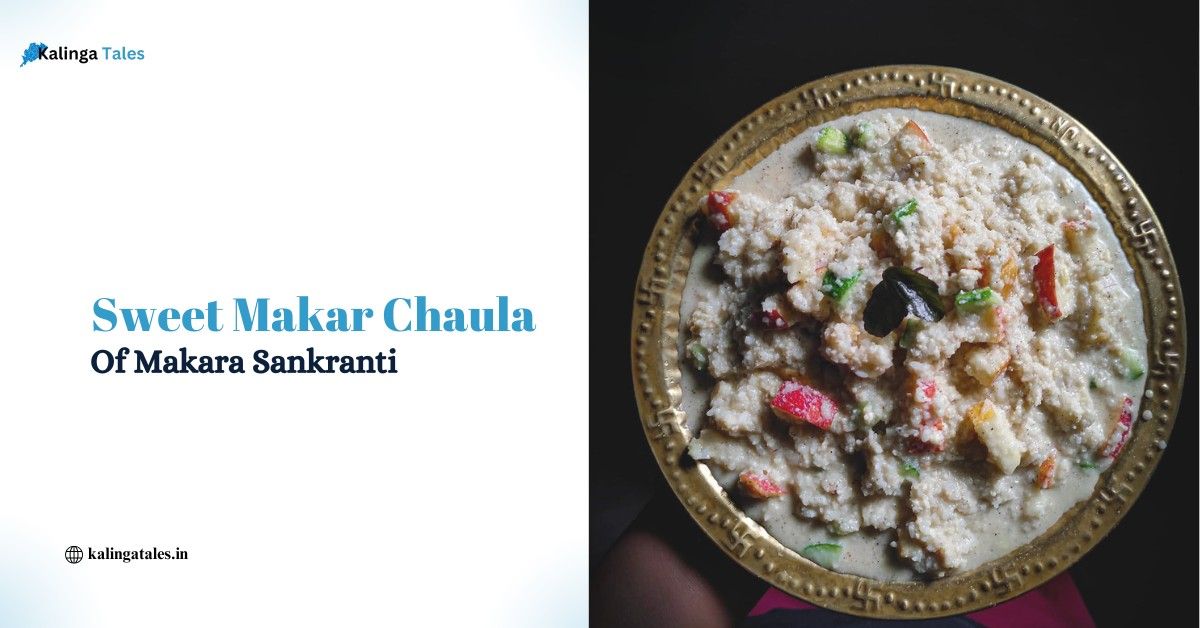
(Source: Instagram/odia_foodfile)
Since the gods are offered the first rice of the season, Makar Sankranti is also known as the Harvest Festival. The usual puja takes place at home, and excited children gather to fly kites. In western India, Makar Sankranti is also referred to as the Kite Festival. This two-day celebration begins with Bhogi on the first day and continues with Makar Sankranti on the second day.
How is Makar Sankranti Celebrated in Puri?
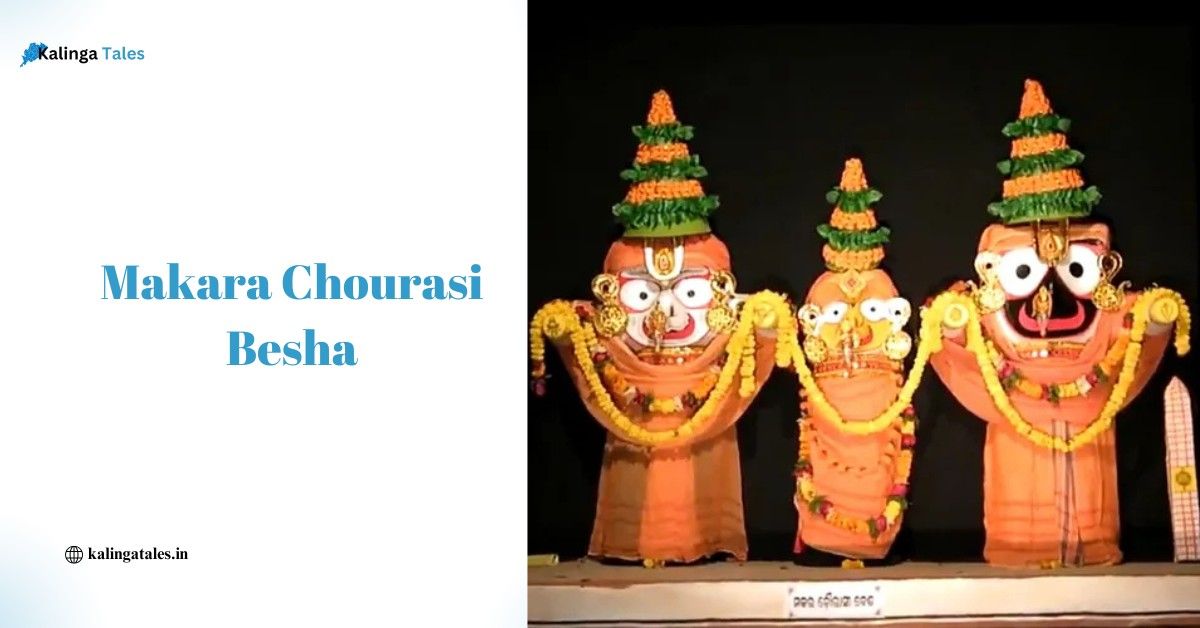
Makar Sankranti is also called Uttarayana Sankranti. On this day, Lord Jagannatha is adorned with Makara Chourasi Besha, a special adornment in which a makara chula (headpiece) is placed on the heads of Jagannatha, Balabhadra, and Subhadra. The deities are decorated with flowers and offered various types of food, with Makara Chaula being the main dish served to them.
It is believed that the sweet Makara Chaula is brought by Maa Laxmi for Jagannatha upon her return from her maternal home. Five special Tadas (earthen pots) are prepared to serve these offerings to the lord.
Suggested Read : Shocking Story Behind Lord Jagannath’s Bala Bhoga
Why is it Called Uttarayana Sankranti?
The term Uttarayana means “movement towards the north.” This day marks the sun’s transition to the northern hemisphere, leading to warmer days as winter comes to an end. On this day, we worship the sun god, as Jagannatha is believed to be the source of all energy. The lord provides energy to the sun, which pays its respects to Jagannatha on this auspicious day.
What is Makara Chourasi Besha?
(Source: Medium/Prateek Pattanaik)
Makara Chourasi Besha is one of the many adornments of Lord Jagannatha. “Chourasi” is the Odia word for 84. Hindus believe that in order to attain salvation, a soul must undergo births in 84 lakh yonis (life forms). In this besha, the main attraction is the headpieces worn by the three deities. As the name suggests, the deities are offered 84 different delicacies, known as Makara Chaurasi Bhoga.
What is a Tada?
A Tada is a pot made from clay. During the festival of Makara Sankranti, a special type of Tada is prepared at the Alam Chandi temple in Puri and then sent to the Puri Shri Mandira. These pots are created exclusively for the three deities. Maa Alam Chandi is one of the Shakti Peethas located in Puri. There is a reference to Alam Chandi in the Skanda Purana, and it is believed that Maa Alam Chandi protects the Ratnavedi. The Alam Chandi Temple holds spiritual significance and is considered one of the important shrines in Puri.
Tusu Devi Puja of the Kudumi Community
In northern Odisha, particularly in the Mayurbhanj District, Makara Sankranti marks the end of Tusu Devi Puja, celebrated by the Kudumi community. On this day, the idol of the Devi is immersed in water. Regardless of how far they may be, community members return to their hometowns to celebrate the festival. Various types of pithas (rice cakes) are prepared, and people sing tribal songs in praise of Goddess Tusu.
Legend of Tusu Devi
According to legend, a long time ago, during the Mughal rule, an attack was planned to capture this part of Odisha. While invading the area, the Mughal ruler fell in love with a girl named Tusu and wanted to marry her. However, Tusu remained steadfast in her decision not to marry the ruler. This angered him, and he tortured Tusu’s family. In her final act to protect her family’s honor, Tusu jumped into a river and committed suicide on the day of Makara Sankranti. Since then, the tribe has continued to worship her. Instead of worshiping the sun, they honor Tusu and remember her sacrifice.
Attractions of Makar Mela
In many parts of Odisha, a Makar Mela (fair) is held. These fairs feature swings, shops, and various attractions. Each village in Odisha has its own Makar Mela where friends and family gather to celebrate the grand occasion of Makara Sankranti. The fair typically lasts for 3-4 days and sometimes up to a week. The highlight of the Mela is the Makar Market, where you can buy almost everything, from needles to household items. Cities like Cuttack and Balasore host the largest fairs and Makar Markets.
Makara Sankranti is filled with emotion for me. The joy of flying kites with friends while enjoying sweet and spicy Makara Chaula evokes nostalgic memories that I hold dear. How can I not mention Akhaya Mohanty’s song, “Udi Udi Udi jaa mora gudi”?
” Udi Udi Udi Udi
Jare udi, ae mora gudi
Kha na kha na tu kani
Ae mora lachkamani… mora lachkamani “
Festivals like this have significantly shaped the childhood of every Odia. The endless songs and stories of our culture, heritage, and traditions bind us together, fostering a sense of togetherness.
Suggested Read : Importance of Radha-Damodar Besa and Kartika Mahatmya